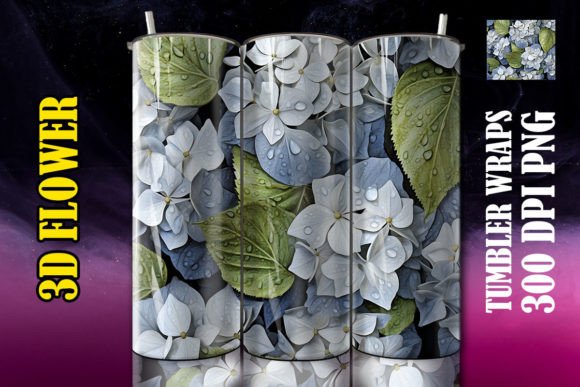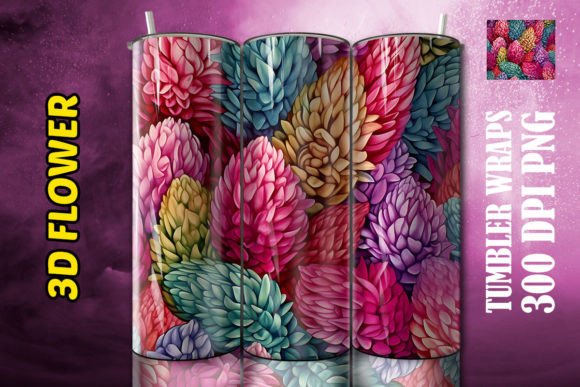
Evaluating 3D Flower Tumbler 77 for Professional Sublimation Workflows
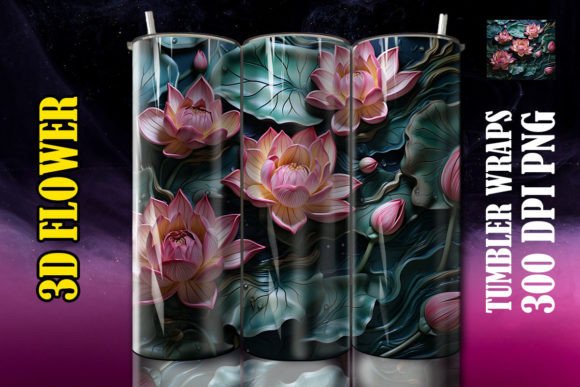
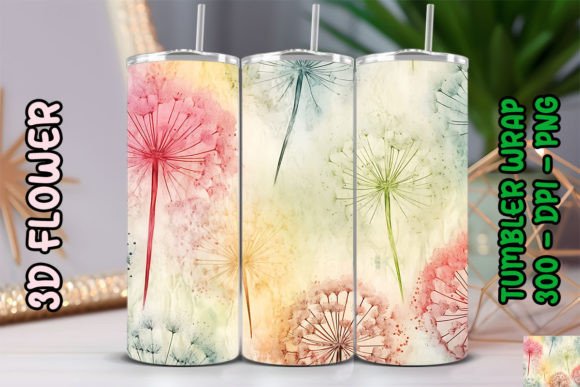
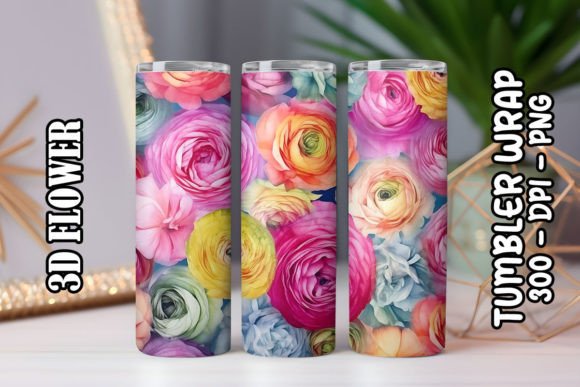
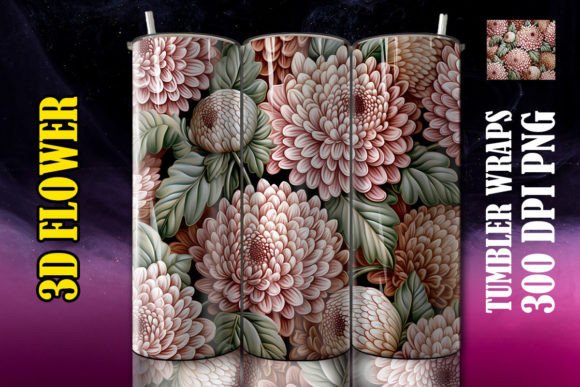
In the competitive landscape of custom drinkware production, the distinction between a generic product and a premium offering often lies in the quality of the digital assets used during manufacturing. The 3D Flower Tumbler 77 represents a specific category of high-resolution sublimation design that addresses the technical demands of modern printing. For creators, small business owners, and freelance designers, understanding the practical utility of this asset goes beyond simple aesthetics; it requires an evaluation of file integrity, dimensional accuracy, and workflow integration. This digital resource serves as a foundational element for producing photorealistic floral tumblers, but its value is entirely dependent on the user’s technical proficiency and equipment calibration.
Technical Specifications and File Integrity
The primary metric for evaluating any sublimation wrap is resolution. The 3D Flower Tumbler 77 PNG bundle is specified at 300 DPI (dots per inch), which is the industry standard for professional-grade heat transfer printing. At the included dimensions of 9.06 inches by 8.11 inches, this resolution ensures that the intricate details of the 3D floral rendering remain crisp when transferred to a curved surface. Lower resolution files often result in pixelation or blurring along the seam lines or near the rim of the tumbler, a defect that is immediately noticeable to customers. Maintaining 300 DPI at this specific aspect ratio indicates that the source file was likely generated or upscaled using appropriate interpolation methods suitable for print rather than web display.
The format itself—PNG—is the correct choice for this application. Unlike JPEGs, which use lossy compression that can introduce artifacts in gradient-heavy 3D renders, PNG files utilize lossless compression. This preserves the smooth color transitions essential for creating the illusion of depth in a 3D flower design. When applying heat and pressure, these gradients must translate seamlessly to the polymer coating on the tumbler. The inclusion of multiple PNG files within the ZIP bundle suggests variations or layered options, providing flexibility for designers who may need to adjust the placement of the floral elements or combine them with personalized text without degrading the base image quality.
Dimensional Accuracy and Application Fit
Sizing is frequently the most challenging variable in tumbler sublimation. The stated dimensions of 9.06 x 8.11 inches for the 3D Flower Tumbler 77 are precise, yet they represent a starting point rather than a universal fit. In real-world production, tumbler blanks vary significantly between manufacturers. A 20oz skinny straight tumbler from one supplier may have a circumference that differs by millimeters from another. Professional users must treat this digital file as a template that requires verification against their specific inventory.
The height of 8.11 inches typically accommodates standard straight tumblers, but the width of 9.06 inches warrants careful measurement. If the target vessel has a larger circumference, stretching this file to fit will distort the 3D perspective of the flowers, breaking the visual illusion and potentially causing blurriness. Conversely, if the tumbler is narrower, the excess material must be trimmed or overlapped, requiring precise alignment to maintain pattern continuity. Experienced operators recommend printing a test sheet on regular paper and wrapping it around the blank before committing to expensive sublimation ink and paper. This step validates whether the 3D Flower Tumbler 77 dimensions align with the physical constraints of the chosen hardware.
Workflow Integration and Usability
For entrepreneurs and freelancers managing high-volume orders, the efficiency of asset deployment directly impacts profitability. As an instant digital download, this resource eliminates shipping wait times, allowing for immediate integration into production schedules. However, the "instant" nature of the delivery places the burden of file management squarely on the user. Upon receiving the ZIP file, best practices dictate extracting the contents to a dedicated project folder and renaming files descriptively. Relying on generic filenames can lead to version control issues when managing multiple floral designs across different client projects.
Usability also extends to software compatibility. While PNG is universally supported, the behavior of the 3D Flower Tumbler 77 file may vary between RIP software, Adobe Photoshop, Illustrator, or free alternatives like GIMP. Users should verify that their software handles the color profile correctly. Sublimation relies on CMYK color spaces, while many digital downloads are created in RGB. Understanding how this specific file converts between color modes is crucial for achieving color accuracy. The vibrant hues typical of 3D floral renders can sometimes shift during conversion, so establishing a consistent color management workflow is necessary to ensure the final printed product matches the digital preview.
Commercial Viability and Design Versatility
From a business perspective, the 3D Flower Tumbler 77 occupies a specific niche. Floral designs possess evergreen appeal in the personalized gift market, but the 3D aspect elevates the perceived value compared to flat vector art. This depth effect creates a tactile visual experience that justifies higher price points. For marketers and shop owners, highlighting the dimensional quality of the print in product photography can differentiate listings in saturated marketplaces like Etsy or Shopify. The design’s realism appeals to demographics seeking sophisticated, nature-inspired aesthetics rather than cartoonish or simplistic graphics.
However, commercial viability depends on licensing and originality. Users must confirm the terms of use associated with the download. While the file facilitates creation, successful businesses often modify base assets to create unique products. Adding monograms, quotes, or complementary graphical elements transforms the 3D Flower Tumbler 77 from a stock image into a proprietary design. This customization not only avoids duplicate content issues in online marketplaces but also builds brand identity. Professionals should view this PNG bundle as a raw material component rather than a finished product, leveraging its high-quality foundation to build distinct offerings that resonate with their specific audience.
Practical Limitations and User Responsibilities
It is imperative to address what this product is not. The listing explicitly states that no physical items are included. This distinction, while standard for digital goods, remains a critical point of failure for novice buyers. There is no tumbler, no printed wrap, and no technical support for printer settings included in the transaction. The value proposition is strictly the digital data. Users lacking sublimation equipment, heat presses, or proficiency in graphic editing software will find this asset unusable. It is a tool for practitioners, not a kit for beginners.
Furthermore, the performance of the 3D Flower Tumbler 77 is contingent upon external variables outside the designer's control. Ink density, press temperature, dwell time, and paper quality all influence the final output. A perfectly rendered 3D flower can appear washed out if the heat press lacks even pressure or if the sublimation ink is expired. Professionals understand that evaluating a digital asset requires isolating variables; if a print fails, one must determine whether the fault lies in the file resolution or the mechanical process. This diagnostic capability is a prerequisite for utilizing high-end digital wraps effectively.
Assessing Long-Term Value in a Digital Library
For serious hobbyists and established businesses, building a reliable library of high-DPI assets is a long-term investment. The 3D Flower Tumbler 77 contributes to this library by filling a gap in realistic botanical textures. Unlike trend-based designs that may lose relevance within months, detailed floral renders tend to retain utility across seasons and occasions. Mother’s Day, weddings, spring promotions, and general appreciation gifts all provide contexts for this aesthetic. The reusability of the file, combined with its technical specifications, supports a sustainable production model where assets are leveraged repeatedly across different campaigns.
Ultimately, the decision to acquire this resource should be based on a realistic assessment of current capabilities and market needs. It offers significant advantages in resolution and visual depth for those equipped to handle it. However, it demands respect for technical processes and an understanding of dimensional tolerances. When integrated correctly into a professional workflow, the 3D Flower Tumbler 77 serves as more than just a pretty picture; it functions as a reliable, high-fidelity component in the complex machinery of custom merchandise production. Evaluating it through this lens ensures that the purchase translates into tangible results rather than unused digital clutter.