3D Warthog Tumbler: Mastering the Digital Wrap for Professional Sublimation Results
Creating a custom 3D Warthog tumbler offers a unique opportunity to blend rugged wildlife aesthetics with functional drinkware design. Whether you are crafting for personal use, fulfilling orders for hunting enthusiasts, or expanding your small business product line, the appeal lies in the immersive depth that a well-executed 3D effect provides. However, achieving that seamless, wrap-around illusion requires more than just pressing an image onto stainless steel. It demands a precise understanding of digital assets, specifically the 3D Warthog Tumbler Tumbler Wrap PNG file. Many creators underestimate the technical nuances of these digital downloads, leading to warped images, pixelated prints, or sizing disasters that waste both time and expensive materials.
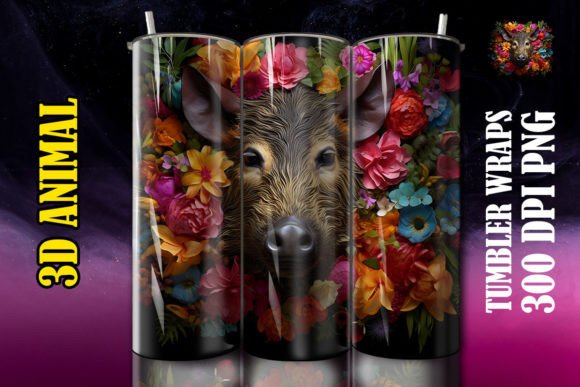
To help you avoid these common pitfalls, it is essential to understand exactly what you are working with before you hit print. When you acquire this specific digital asset, you are receiving an instant download containing a ZIP file with a bundle of high-resolution PNG files. These are sized at approximately 9.06 inches by 8.11 inches at 300 DPI. This specification is not arbitrary; it is engineered for standard 20oz skinny tumblers. Recognizing these parameters as strict guidelines rather than suggestions is the first step toward professional-quality sublimation.
Common Sizing Misconceptions and How to Fix Them
The most frequent error beginners make when working with a 3D Warthog tumbler wrap is assuming the provided dimensions will universally fit every tumbler blank on the market. While 9.06 x 8.11 inches is a standard size for many 20oz tapered tumblers, manufacturing tolerances vary significantly between brands. A difference of merely two millimeters in circumference can result in a visible seam overlap or a gap where the design fails to meet itself. This misalignment destroys the 3D illusion instantly, turning what should be a continuous scene into a disjointed graphic.
Rather than blindly printing the file at 100% scale, adopt a measurement-first workflow. Use flexible measuring tape to verify the exact circumference and height of your specific tumbler blank. If your tumbler measures slightly differently than the 9.06 x 8.11 specification, you must adjust the digital file in your editing software before printing. Stretching or shrinking a raster PNG file can degrade quality, so it is often better to add a solid color border or extend the background texture if the tumbler is larger, rather than distorting the warthog imagery itself. Taking thirty seconds to measure can save you from ruining a $15 blank and wasting sublimation ink.
Understanding Resolution and Print Clarity
Another critical detail involves the resolution of the digital files. The included PNGs are 300 DPI (dots per inch), which is the industry standard for crisp sublimation printing. A common misunderstanding occurs when users open these files in software that automatically resamples images to screen resolution (usually 72 or 96 DPI) for faster processing. If you accidentally print at this lower setting, the intricate details of the warthog’s fur and the 3D shading will appear muddy or pixelated on the final product. The 3D effect relies entirely on sharp contrast and fine detail to trick the eye into perceiving depth; low resolution flattens this effect completely.
Always verify your document settings immediately after opening the file. Ensure your canvas matches the physical dimensions of 9.06 x 8.11 inches and that the resolution remains locked at 300 DPI. If you need to resize the image, do so using bicubic sharper reduction methods to maintain edge definition. Remember that sublimation ink spreads slightly when heated, which can soften details. Starting with maximum clarity ensures the final pressed image retains the intended visual impact. Never assume your software has preserved the file's native quality; always double-check before sending to the printer.
Navigating the Digital Download Process Correctly
Because this item is strictly a digital file for instant download, there is no physical product shipped to your door. Newcomers to digital crafting sometimes miss this distinction, expecting a printed transfer or a pre-made tumbler. This confusion can lead to frustration and unnecessary support tickets. Furthermore, managing the ZIP file correctly is vital for preserving file integrity. Extracting files directly from the zipped folder without saving them to a dedicated project directory can sometimes cause corruption or loss of metadata during the editing process.
Treat your digital assets with the same care as physical inventory. Upon purchase, download the ZIP file and immediately extract all contents to a clearly labeled folder on your computer or cloud storage. Verify that all PNG files in the bundle are present and openable before starting your project. Since this is an instant download, you have immediate access, but you also bear full responsibility for file management. Organizing your digital library now prevents the panic of missing files when you are mid-production on a customer order.
Technical Prerequisites for Sublimation Success
It is important to emphasize that owning the 3D Warthog Tumbler Tumbler Wrap PNG file does not guarantee success if you lack the necessary hardware and knowledge. You must know how to use these files for sublimation printing specifically. This design is optimized for dye-sublimation processes, meaning it requires polyester-coated blanks, sublimation ink, and a heat press capable of reaching appropriate temperatures. Attempting to use this file with vinyl cutters, laser engravers, or standard inkjet transfers will yield poor results because the 3D shading is designed to interact with light through the polymer coating of a sublimation tumbler.
If you are new to sublimation, practice with test prints on paper first to check alignment and color accuracy. The 3D effect in this warthog design uses gradients and shadows that may look different on screen compared to paper, and different again once pressed onto metal. Color profiles play a massive role here; ensure your printer is using the correct ICC profile for your specific ink and paper combination. Without proper color management, the earthy tones typical of warthog wildlife art can shift toward magenta or green, ruining the realistic aesthetic. Investing time in calibration is far more cost-effective than wasting premium wraps on trial-and-error pressing.
Evaluating Design Suitability for Your Audience
Before committing to this specific design, consider whether the 3D Warthog tumbler aesthetic aligns with your target demographic or personal taste. Wildlife art is niche, and 3D rendering styles vary from photorealistic to stylized. A mistake many sellers make is choosing designs based solely on personal preference rather than market demand or end-user expectations. If you are creating for sale, research current trends in outdoor and hunting gear. Does this specific warthog depiction match the style of other popular items in that category?
Additionally, evaluate the complexity of the 3D wrap against your current skill level. Seamless wraps require precise application techniques, including proper taping and consistent pressure during pressing. If the 3D elements wrap around the curvature in a way that demands perfect alignment, ensure you have practiced similar applications. There is no shame in starting with simpler, non-3D designs to build muscle memory before tackling complex optical illusions. Choosing the right difficulty level for your current expertise ensures a satisfying experience and a superior final product.
Making Informed Decisions for Better Outcomes
Ultimately, the success of your 3D Warthog tumbler project hinges on preparation and attention to detail. By respecting the 9.06 x 8.11 inch specifications, maintaining 300 DPI resolution, and verifying your equipment compatibility, you transform a simple digital download into a professional-grade product. Avoid the temptation to rush through the setup phase. The difference between an amateur craft and a sellable product often lies in these foundational checks.
Take advantage of the bundled nature of this download to experiment with variations once you have mastered the basics. Having multiple PNG files allows for testing different orientations or color corrections without additional cost. Approach each print as a learning opportunity, documenting your press times, temperatures, and sizing adjustments. This methodical approach not only improves your 3D Warthog tumbler results but also builds a reliable production system for future sublimation projects. With the right mindset and technical diligence, this digital asset becomes a powerful tool in your creative arsenal.