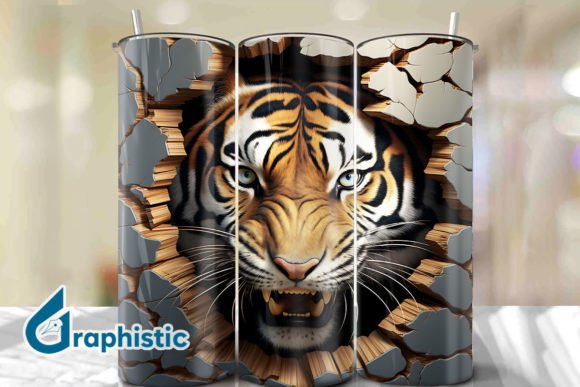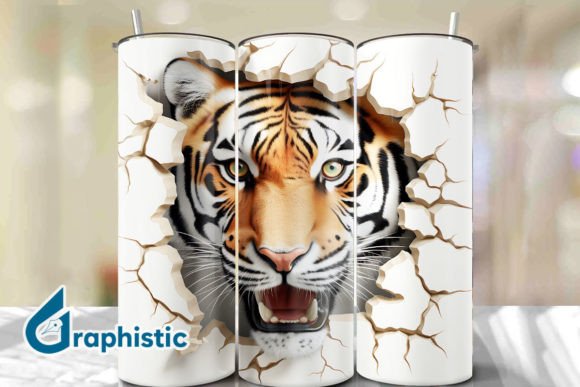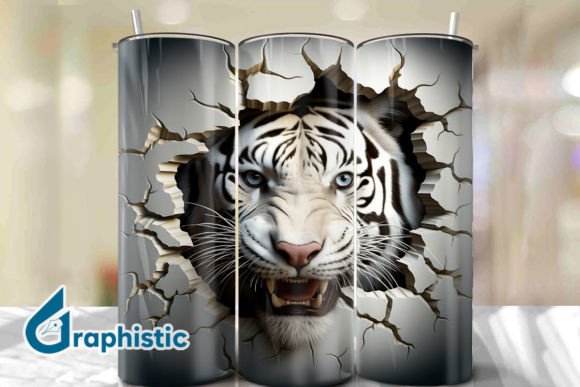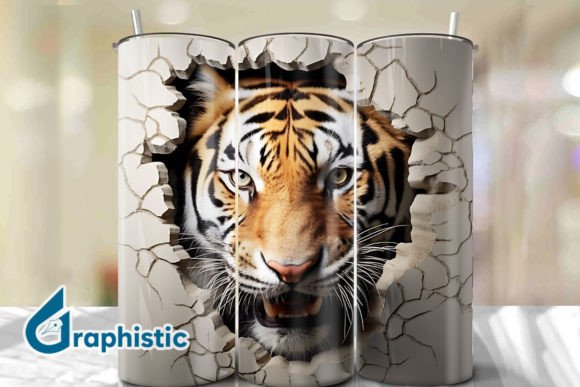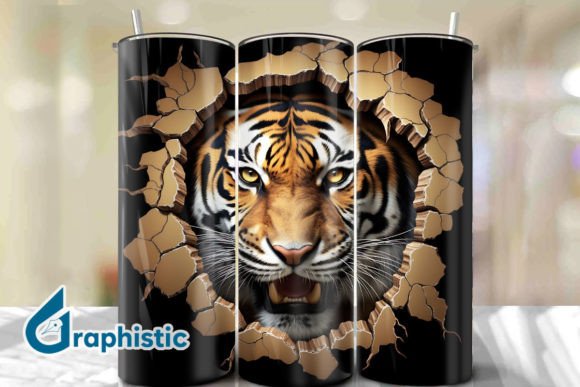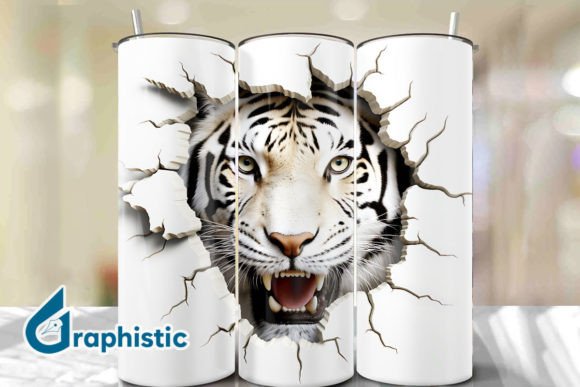
Unleashing Creativity: Understanding Tiger 3D Smash Wall Art Digital Backgrounds
In the rapidly evolving world of digital design and visual communication, the demand for high-impact, immersive imagery has never been higher. Whether you are a seasoned graphic designer, a small business owner managing social media, or a hobbyist creating personalized crafts, the quality of your background assets dictates the success of your final project. Among the myriad of options available today, the Tiger 3D Smash Wall Art Background 20 stands out as a prime example of how digital art can bridge the gap between virtual creativity and tangible reality. This article explores the significance, technical specifications, and versatile applications of this specific digital asset, helping you understand why high-resolution 3D render backgrounds are essential tools in modern creative workflows.
The Rise of 3D Digital Wall Art
To fully appreciate the value of the Tiger 3D Smash Wall Art Background 20, one must first understand the shift from traditional photography to 3D rendering in design. Historically, capturing a dynamic image of a tiger breaking through a wall would require complex physical sets, expensive props, and potentially dangerous animal handling. Today, 3D digital art allows artists to construct these hyper-realistic scenes entirely within a virtual environment. This technology offers perfect lighting, impossible angles, and flawless composition that physical photography often cannot achieve.
The "Smash" effect is particularly significant in visual psychology. It creates an immediate focal point, suggesting motion, power, and breakthrough. When used as a background, it transforms a flat surface into a window with depth. For designers, this means the asset is not merely a picture; it is a structural element that adds dimension to invitations, banners, and web layouts. Understanding this distinction is crucial for beginners who might otherwise treat a 3D render as a standard stock photo. These assets are designed to interact with foreground elements, providing a stage rather than just a backdrop.
Technical Excellence: Why 300 DPI Matters
One of the most critical specifications included with the Tiger 3D Smash Wall Art Background 20 digital download is the high-quality 300dpi resolution. For those new to digital imaging, DPI (dots per inch) is the standard measurement of print density. While screens typically display images at 72 or 96 PPI (pixels per inch), professional printing requires 300 DPI to ensure crisp, artifact-free results.
This technical specification serves two distinct purposes:
- Print Versatility: At 300 DPI, this digital image can be scaled for various physical applications without losing clarity. Whether you are printing a small 5x7 invitation card or a large-format banner, the pixel density ensures that the tiger’s fur texture and the debris from the "smash" remain sharp and defined.
- Digital Flexibility: Even if your primary use is web-based, starting with a 300 DPI source file provides a safety net. It allows you to crop, zoom, and resize extensively while maintaining enough resolution for high-definition displays and retina screens. Low-resolution files limit creative freedom; high-resolution assets expand it.
It is important to clarify a common misconception: receiving a digital ZIP file containing JPG and PNG formats does not mean compromising on quality. On the contrary, digital delivery ensures you receive the pristine master file without the degradation that can occur during physical reproduction or third-party scanning.
File Formats and Workflow Integration
The inclusion of both JPG and PNG files in the ZIP archive addresses different needs within the design ecosystem. Understanding when to use each format is fundamental to maximizing the utility of the Tiger 3D Smash Wall Art Background 20.
JPEG Files for Maximum Compatibility
The JPG format is the industry standard for photographic and rendered imagery. It offers an excellent balance between file size and visual fidelity. This format is ideal for:
- Social media banners where upload speed and platform compression are factors.
- Web backgrounds where page load times impact user experience.
- Standard printing projects like flyers and cards.
PNG Files for Layered Design
While often associated with transparency, high-quality PNGs in this context also serve as lossless containers. If the specific asset includes transparent elements or requires overlaying onto other textures without generation loss, the PNG format preserves edge detail better than JPEG. This is particularly useful for scrapbooking and composite graphic design where multiple layers are blended together.
Practical Applications Across Industries
The versatility of the Tiger 3D Smash Wall Art Background 20 extends far beyond simple wall decoration. Because it is delivered as a digital asset, its application is limited only by the user's imagination. Here is how this asset fits into various modern creative sectors:
Marketing and Social Media
In the attention economy, static posts often fail to engage. A 3D smash effect acts as a visual hook. Marketers can use this background for YouTube thumbnails, Facebook covers, or Instagram stories to convey themes of strength, launching new products, or "breaking through" noise. The dynamic nature of the image increases click-through rates compared to generic gradients or flat colors.
Event Planning and Stationery
For themed events, such as jungle safaris, sports teams with feline mascots, or bold birthday parties, this background provides a cohesive visual identity. Planners can use the digital file to create matching suites including invitations, thank-you cards, table numbers, and welcome banners. The ability to print these items locally or via online services using the same high-res source file ensures brand consistency.
Education and Presentation
Educators and speakers often struggle with boring slide decks. Using a high-impact 3D background can reinvigorate presentations about wildlife biology, art history, or even motivational speaking. The "smash" metaphor visually reinforces concepts of impact, force, and energy, making abstract ideas more concrete for audiences.
Crafting and DIY Projects
The maker community relies heavily on digital assets for physical creations. This background is suitable for decoupage, custom t-shirt transfers (sublimation), and personalized mugs. Because the file is digital, crafters can manipulate the color grading or contrast to match specific materials before printing, ensuring the final handmade product looks professional.
Navigating Digital Assets: Best Practices
When working with premium digital downloads like the Tiger 3D Smash Wall Art Background 20, proper file management is essential. Since no physical image is delivered, the responsibility lies with the user to maintain the integrity of the files.
- Backup Immediately: Upon downloading the ZIP file, extract it and store copies in cloud storage and on an external drive. Digital assets are easily lost during computer migrations.
- Color Profiles: Be aware that screens emit light (RGB) while printers reflect light (CMYK). When preparing this background for professional printing, you may need to convert the color profile to avoid unexpected color shifts, particularly in the vibrant oranges and deep shadows typical of tiger imagery.
- Licensing Awareness: Always review the specific license terms associated with the digital download. Understanding whether the asset is for personal use, commercial use, or extended licensing prevents legal issues down the line.
Conclusion: Empowering Creative Vision
The Tiger 3D Smash Wall Art Background 20 represents more than just a picture of an animal; it is a sophisticated design tool tailored for the modern creator. By combining artistic flair with technical precision—specifically the 300 DPI resolution and dual-format availability—it empowers users to execute projects that look professionally produced regardless of their skill level. From enhancing digital marketing campaigns to adding flair to personal scrapbooks, this digital asset exemplifies how accessible high-quality art has become. By understanding the technical foundations and practical applications discussed above, you can move beyond simply downloading an image to truly integrating a powerful visual element into your creative repertoire. In a digital-first world, mastering these assets is key to producing work that resonates, engages, and endures.