Evaluating Watercolor Tulip Seamless Patterns for Design Projects
Selecting the right visual assets is a critical step in any creative workflow, particularly when the project involves floral motifs. The Watercolor Tulip Seamless Pattern represents a specific niche within digital design resources, combining traditional artistic aesthetics with modern technical utility. For designers, crafters, and print-on-demand sellers, understanding the practical applications, technical specifications, and limitations of this asset type is essential for making informed purchasing decisions. This evaluation explores whether a 12x12 inch, 300dpi PNG tulip bundle aligns with specific project goals and production requirements.
Defining the Asset and Technical Specifications
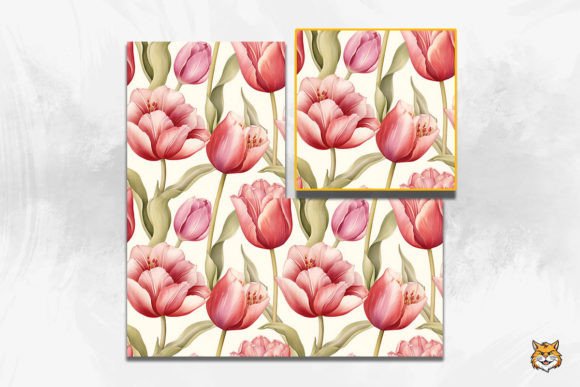
A Watercolor Tulip Seamless Pattern is a digital image file where the edges align perfectly on all four sides, allowing the design to repeat infinitely without visible seams or interruptions. Unlike standard illustrations that have defined borders, seamless patterns are engineered specifically for tiling across surfaces of varying dimensions. The specific asset described here is delivered as a high-quality 300dpi PNG file sized at 12 inches by 12 inches. These specifications are significant because they dictate the upper limits of print quality and the flexibility of the design.
The 300dpi resolution is the industry standard for professional printing, ensuring that the watercolor texture remains crisp and the colors do not appear pixelated when reproduced physically. The 12x12 inch tile size offers a substantial repeat unit, which is generally large enough to prevent obvious repetition on medium-sized items like greeting cards or scrapbook pages. However, users must understand that while PNG files support transparency and lossless compression, they are raster-based. This means that unlike vector files, the pattern cannot be scaled up indefinitely without a loss in fidelity. Evaluating this technical constraint is the first step in determining suitability for large-format projects.
Primary Use Cases and Application Fit
The versatility of a Tulip seamless pattern makes it applicable across both digital and physical mediums. When evaluating this asset, consider how the watercolor aesthetic interacts with your intended output. Watercolor textures convey softness, organic movement, and traditional craftsmanship, making them particularly strong fits for specific categories.
- Stationery and Invitations: The romantic and delicate nature of tulips pairs naturally with wedding invitations, baby shower announcements, and spring-themed greeting cards. The seamless quality allows the pattern to serve as a full-bleed background or a subtle border element.
- Textile and Surface Design: For those creating fabric prints, wrapping paper, or wallpaper, the seamless tiling is non-negotiable. A 12-inch repeat provides a balanced scale for home decor items, avoiding the cluttered look of smaller repeats or the sparse feel of larger ones.
- Digital Backgrounds: Web backgrounds, social media banners, and blog headers benefit from the organic texture of watercolor tulips. Because screens display at lower resolutions than print (typically 72-96dpi), the 300dpi source file allows for significant downscaling, resulting in sharp, vibrant digital displays.
- Scrapbooking and Crafting: Physical craft projects often require high-resolution assets to maintain detail after trimming and layering. The included zip file format facilitates easy organization of these assets within digital cutting machine software or layout programs.
Benefits Versus Tradeoffs
Choosing a pre-made Watercolor Tulip Seamless Pattern over commissioning custom art or generating AI imagery involves distinct tradeoffs. Understanding these helps manage expectations regarding uniqueness and workflow efficiency.
Efficiency and Consistency
The primary benefit is immediate usability. Creating a truly seamless watercolor pattern manually requires advanced painting skills and digital manipulation to ensure edges match perfectly. Purchasing a ready-made bundle eliminates hours of technical labor. Furthermore, using a consistent Tulip background across multiple project elements (e.g., matching envelopes, cards, and table numbers) ensures visual cohesion that is difficult to achieve when sourcing disparate images.
Resolution Limitations and Format Constraints
A significant consideration is the raster format. While 12x12 inches at 300dpi is excellent for most stationery and web use, it may be insufficient for large-scale signage or billboard-sized Tulip wallpaper. If a project requires scaling beyond the native dimensions, the watercolor edges may soften excessively or pixelate. Additionally, PNG files can be large; users working with older hardware or limited storage should verify their system can handle high-resolution raster layers efficiently. Unlike vector formats (SVG/EPS), individual elements within the pattern cannot be easily recolored or rearranged without advanced masking techniques.
Situational Suitability: When to Choose Alternatives
While the Watercolor Tulip Seamless Pattern is a robust resource, it is not universally optimal. Objective evaluation requires recognizing when alternative solutions better serve specific needs.
Consider Vector Alternatives If: You require infinite scalability for large-format printing (banners, vehicle wraps) or need to isolate and recolor individual tulips frequently. Vectors allow for mathematical resizing without quality loss and offer editable color paths. If brand color matching is strict, a raster watercolor pattern may present challenges due to the complex blending of pigments.
Consider Custom Illustration If: Your project demands exclusive rights or a highly specific botanical accuracy. Stock patterns, including tulip bundles, are typically licensed for commercial use but are non-exclusive. Competitors or other creators may utilize the same Tulip seamless pattern. For luxury branding where uniqueness is a selling point, custom art is superior.
Consider AI Generation If: You need rapid prototyping of dozens of variations and are comfortable with potential inconsistencies in botanical anatomy or seam matching. However, for professional print products where reliability and technical perfection are paramount, curated human-made assets often provide safer, more predictable results.
Practical Decision-Making Insights
When integrating a Tulip bundle into a design workflow, several practical factors influence success. First, always test the seam alignment before committing to a full production run. Print a small section at actual size to verify that the transition between tiles is invisible and that the color density remains consistent across the join line. Second, consider color management. Watercolor scans can sometimes shift during printing due to gamut differences between RGB screens and CMYK printers. Requesting or converting the file to the appropriate color profile early in the process prevents disappointment with the final Tulip wallpaper or wrap output.
Finally, review licensing terms carefully. While the asset is suitable for cards, invitations, and web backgrounds, some licenses restrict usage in end-products intended for resale versus personal use. Ensuring the license covers your specific commercial intent protects against future legal complications. By weighing the convenience of a high-quality 300dpi PNG against the technical constraints of raster art and the stylistic implications of watercolor media, creators can confidently determine if this Watercolor Tulip Seamless Pattern is the correct foundation for their next project.