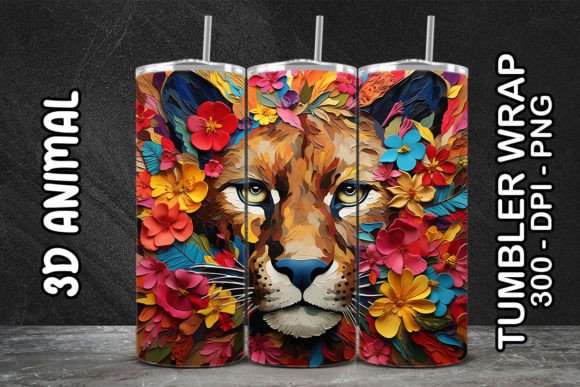
Evaluating the 3D Cougar Tumbler Wrap PNG for Sublimation Projects
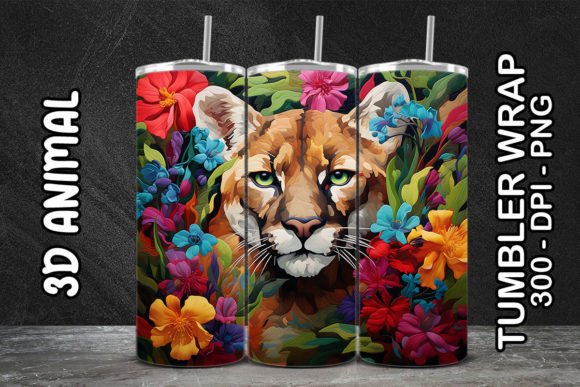
Selecting the right digital asset for sublimation printing requires more than just finding an appealing image; it demands a technical understanding of file specifications, visual depth, and application suitability. The 3D Cougar Tumbler design represents a specific niche within wildlife and collegiate-style drinkware customization. Unlike flat vector art or standard photography, this resource utilizes shading and perspective to create a dimensional effect on a curved surface. For crafters and small business owners aged 20 to 50 who are weighing their production options, understanding the distinct characteristics of this 3D Cougar Tumbler wrap is essential for determining if it aligns with current project goals and equipment capabilities.
Defining the 3D Aesthetic in Digital Wraps
The term "3D" in the context of tumbler wraps does not refer to a physical texture or embossing, but rather a visual simulation of depth created through digital rendering. When evaluating a 3D Cougar Tumbler PNG, you are looking at a raster image where shadows, highlights, and gradients have been manipulated to mimic how light interacts with a three-dimensional object. This distinction is critical when comparing this format to traditional 2D clipart or seamless patterns.
Standard flat designs often rely on bold outlines and solid colors, which can sometimes appear stiff or cartoonish on larger tumblers. In contrast, the 3D Cougar Tumbler aesthetic aims for realism or stylized dimensionality. This makes it particularly effective for subjects like wildlife, where fur texture and muscle definition benefit from lighting effects. However, this visual complexity introduces specific tradeoffs. While a 3D render offers superior visual impact, it is less forgiving during the printing process. Color banding, monitor calibration discrepancies, and substrate curvature can all affect how the perceived depth translates from screen to steel. Buyers must assess whether their target audience prefers high-impact realism or the cleaner, more reproducible look of flat graphics.
Technical Specifications and File Integrity
A primary decision factor for any digital download is the technical adequacy of the file for its intended use. The 3D Cougar Tumbler resource typically arrives as a ZIP file containing multiple PNG assets sized at 9.06 inches by 8.11 inches at 300 DPI. These specifications are not arbitrary; they represent the industry standard for 20oz skinny straight tumblers.
When comparing this bundle to other marketplace options, pay close attention to the resolution. Some lower-cost alternatives may offer similar cougar imagery at 72 DPI or smaller dimensions, requiring upscaling that results in pixelation and loss of detail. The 300 DPI specification in this 3D Cougar Tumbler pack ensures that the subtle gradients defining the 3D effect remain crisp after heat transfer. Furthermore, receiving a bundle of several PNG files rather than a single JPEG provides necessary flexibility. PNG formats support transparency and lossless compression, preserving the integrity of the shadow work essential to the 3D illusion. If you are accustomed to working with vector files (SVG/EPS), note that this raster-based approach limits infinite scalability but offers photorealistic detail that vectors cannot easily replicate without complex mesh gradients.
Comparing Digital Downloads vs. Physical Transfers
For makers deciding between purchasing a digital 3D Cougar Tumbler wrap and buying pre-printed physical transfers, the choice hinges on volume, customization needs, and overhead. Digital downloads provide immediate access and zero shipping costs, making them ideal for prototyping or on-demand production. You retain full control over color correction and sizing adjustments before printing.
Conversely, physical transfers eliminate the need for sublimation paper, ink, and printer maintenance. They offer consistency that can be difficult to achieve with home setups. However, physical transfers lock you into a specific size and color profile. The digital 3D Cougar Tumbler file allows for experimentation; you can adjust saturation to match different tumbler coatings or combine the cougar element with personalized text overlays. For businesses testing market demand for wildlife themes, the low barrier to entry of a digital file reduces financial risk. If the design proves popular, the per-unit cost of digital sublimation drops significantly compared to outsourcing physical prints. Yet, if your equipment struggles with color accuracy or you lack the time for trial-and-error testing, the higher upfront cost of physical transfers may offer better operational efficiency.
Application Fit and Audience Considerations
Not every design suits every demographic or occasion. The 3D Cougar Tumbler occupies a specific intersection of outdoor enthusiasm, school spirit, and rustic aesthetics. When evaluating this against generic floral, geometric, or minimalist trends, consider the end-user's identity. Cougar motifs resonate strongly with hiking enthusiasts, hunters, nature photographers, and alumni of universities with feline mascots.
This specificity is both a strength and a limitation. A 3D cougar design has higher perceived value within its niche than a generic pattern because it signals membership in a particular community. However, it lacks the universal appeal of abstract art. If your shop focuses on broad, trending aesthetics, this specialized asset might underperform. Conversely, if you serve a regional market where cougars are culturally significant, this 3D Cougar Tumbler wrap could outperform safer, more generic options. Additionally, consider the gender and age demographics of your customer base. Realistic 3D wildlife tends to skew differently than stylized or cartoon versions. Analyzing your past sales data for similar themes can help determine if this specific artistic interpretation aligns with your existing clientele’s preferences.
Tradeoffs and Limitations of Raster-Based 3D Wraps
While the visual appeal of a 3D Cougar Tumbler is evident, practical limitations exist. As a fixed-size raster file (9.06 x 8.11 in), it is optimized specifically for 20oz skinny tumblers. Adapting this design for 30oz tumblers, mugs, or wine tumblers requires cropping or stretching that may distort the 3D perspective. Unlike vector art, you cannot simply expand the canvas without compromising the illusion of depth. This rigidity means you may need to purchase additional size-specific files if you plan to offer a diverse product line.
Another consideration is the learning curve associated with sublimating detailed 3D renders. Darker shadows and fine fur textures can reveal imperfections in tumbler coatings or heat press inconsistencies more readily than flat colors. If your current setup produces uneven heating or if you use lower-quality blanks, the sophisticated details of a 3D cougar may appear muddy or blotchy. In such cases, simpler, high-contrast graphics might yield more consistent commercial results until equipment or technique improves. Evaluating your current production quality honestly is as important as evaluating the design itself.
Making the Final Selection Decision
Ultimately, choosing a 3D Cougar Tumbler PNG file involves balancing artistic preference with technical reality. It is the right choice when you possess adequate sublimation equipment, require high-resolution wildlife art for 20oz tumblers, and serve a niche audience that values dimensional realism. It serves as a cost-effective alternative to custom illustration or physical transfers for makers ready to manage the printing variables.
However, readers should seek alternative options if they require multi-size versatility from a single file, lack confidence in their color management skills, or cater to a demographic uninterested in wildlife themes. Before purchasing, verify that your software supports PNG layers and that your printer profiles are calibrated for the vibrant gradients inherent in 3D renders. By treating this digital asset as a professional tool rather than mere decoration, you can accurately assess its potential return on investment and creative fit within your broader product ecosystem. Remember that this is strictly a digital download; success depends entirely on your ability to translate the 9.06 x 8.11 inch, 300 DPI file into a tangible product through your own expertise and resources.